
Resume Tips For Job


Resume Types
Chronological Resume – Lists work history from newest to oldest. Best for steady careers.
Functional (Skills-Based) Resume – Focuses on skills, not jobs. Good for career changers or gaps.
Combination Resume – Mix of skills and work history. Ideal for experienced professionals.
Targeted Resume – Tailored for a specific job. Highlights relevant skills and experience.
Mini Resume – One-page summary. Useful for networking or quick introductions.
Infographic Resume – Visual resume. Great for creative roles.
Video Resume – Short video showcasing skills and personality. Best for media or customer-facing jobs.

1. Understanding the U.S. Resume Format and Structure
A resume in the United States follows a professional, simple, and results-focused format. Unlike some countries, U.S. employers prefer resumes that are concise and directly relevant to the job.
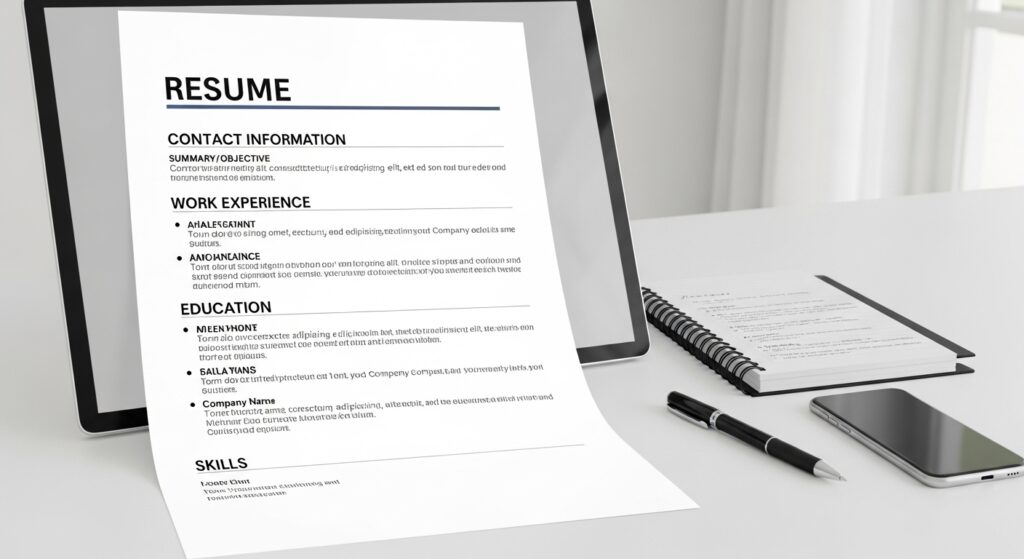
A standard U.S. resume typically includes:
- Contact Information
- Professional Summary
- Work Experience
- Skills
- Education
The ideal length is one page for entry-level candidates and two pages for experienced professionals. Employers often spend only a few seconds scanning each resume, so clarity and organization are critical.
It is also important to note what not to include:
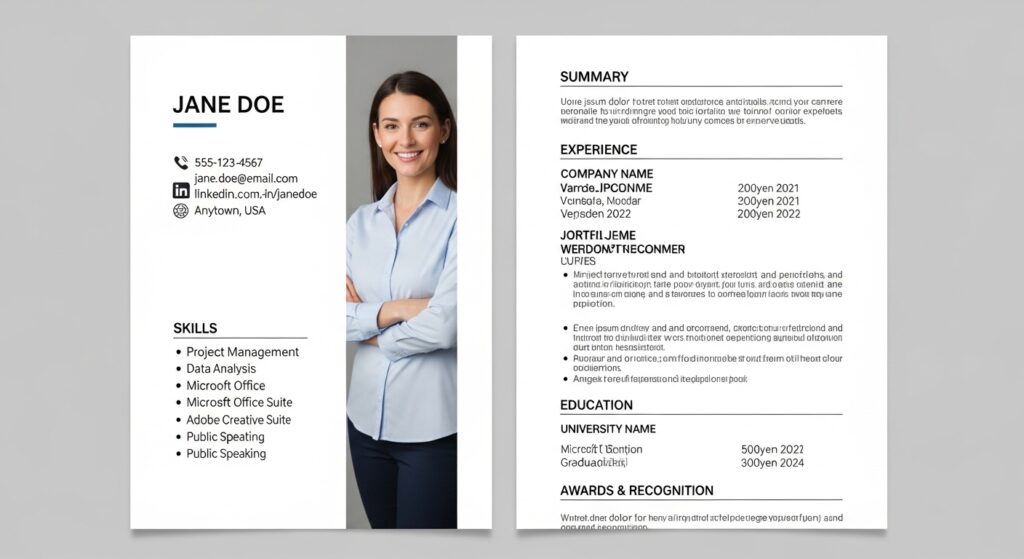
- No photo
- No date of birth
- No marital status
- No religion or personal identity details
The focus is strictly on your professional qualifications and achievements, which makes your resume more objective and aligned with U.S. hiring practices.
Resume Tips For Job
2. Writing a Powerful Professional Summary
The professional summary is one of the most important parts of your resume. It appears at the top and provides a quick overview of your experience, skills, and career goals.
A strong summary should:
- Be 2–4 lines long
- Highlight key achievements
- Match the job you are applying for
Example (Warehouse Job):
“Reliable warehouse associate with 3+ years of experience in inventory control and order fulfillment. Skilled in operating equipment and maintaining accuracy in fast-paced environments.”
Example (IT Job):
“Detail-oriented data analyst with strong experience in SQL and data visualization. Proven ability to turn complex data into actionable insights.”
This section should immediately convince the employer that you are a strong candidate.
Resume Tips For Job
3. Showcasing Work Experience with Achievements
Work experience is the most important section of your resume. U.S. employers are highly interested in what you have accomplished in previous roles, not just your responsibilities.
Always use reverse chronological order, starting with your most recent job.
Each job entry should include:
- Job title
- Company name (e.g., Amazon)
- Dates of employment
- Key achievements
Focus on results using numbers and measurable outcomes.
Weak Example:
- Responsible for handling packages
Strong Example:
- Processed over 200 packages daily with 99% accuracy
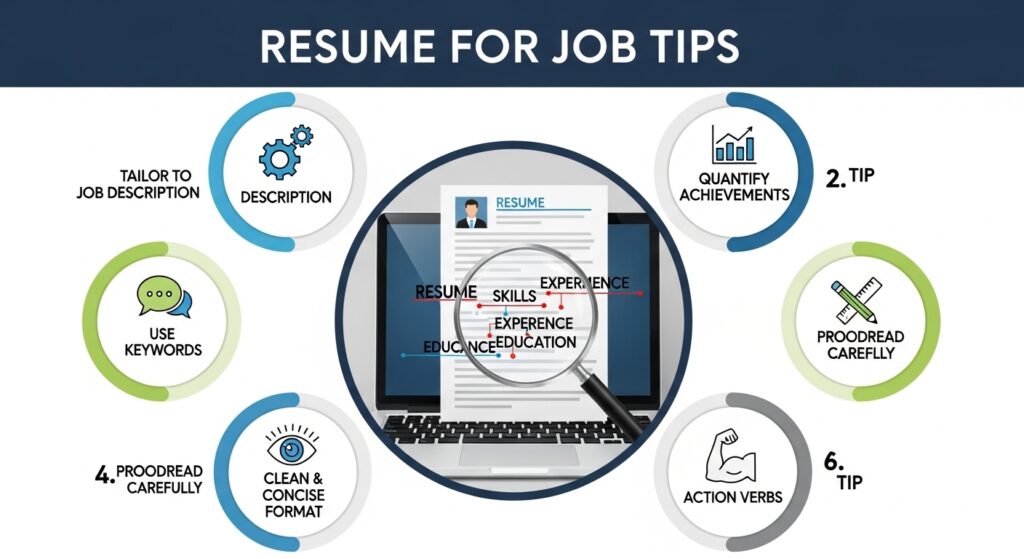
Using action verbs such as “managed,” “improved,” “led,” and “achieved” makes your resume more impactful and professional.
Resume Tips For Job
4. Optimizing Your Resume for ATS (Applicant Tracking Systems)
Most companies in the U.S. use automated systems to filter resumes before a human sees them. These systems are called ATS (Applicant Tracking Systems).
When applying through platforms like:
- Indeed
Your resume must include relevant keywords from the job description.
Tips to pass ATS:
- Use exact job titles mentioned in the posting
- Include industry-specific keywords
- Avoid complex graphics or images
- Use standard headings like “Work Experience” and “Skills”
For example, if the job description mentions “inventory management,” make sure that exact phrase appears in your resume.
This increases your chances of getting shortlisted.
Resume Tips For Job
5. Highlighting Skills, Education, and Certifications
A strong resume clearly presents your skills and qualifications.
Skills Section:
Divide skills into categories if possible:
- Technical Skills (e.g., Excel, SQL, forklift operation)
- Soft Skills (e.g., communication, teamwork)
Education:
Include:
- Degree or diploma
- Institution name
- Graduation year
Certifications:
Certifications can significantly improve your chances, especially for practical jobs:
- Forklift license (warehouse jobs)
- CDL license (truck driving jobs)
- IT certifications (for tech roles)
Only include information that is relevant to the job, as unnecessary details can make your resume less effective.
Resume Tips For Job
6. Final Tips to Make Your Resume Stand Out
To make your resume competitive in the U.S. job market, follow these final best practices:
✔ Keep formatting clean and professional
✔ Use bullet points instead of long paragraphs
✔ Check grammar and spelling carefully
✔ Save your resume as a PDF before sending
✔ Tailor your resume for each job application
Also, include clear contact information:
- Full name
- Phone number
- Professional email
- Location (e.g., Mississauga, Canada)
Avoid using unprofessional email addresses and ensure your contact details are easy to find.
Resume Tips For Job
✅ Conclusion
A strong resume is essential for getting a job in the United States. It should be clear, concise, and focused on achievements, while also being optimized for ATS systems. By customizing your resume for each job and highlighting your skills effectively, you can greatly increase your chances of getting interviews.
hdqrrkvnyqxlgyfvkkuqexoexwtjrx
ksjuggnviugemrynwpkxniwqwqyzzp